

Encouragement Multiplies
Field Note: If You Want to Get Someone's Attention

We had a running joke in the house where I grew up. It came from an old perfume commercial that featured a line only an advertising executive or a poetic child could love: “If you want to get someone’s attention… whisper.”
For unknown reasons, that line became our family’s go-to intro. Whenever we needed something, we’d start with: “If you want to get someone’s attention… whisper.” Then came the real request: Help with maths. A ride to the shops. Once, a small kitchen fire (true story!).
It was funny, but as I got older, I realised something. I enjoyed the joke more than the moment that followed. I hated asking for help. Even as a kid, I remember the small knot in the stomach that came with it, the quiet feeling that a capable person ought to be able to handle things alone.
So we whisper.
Not because whispering gets attention, but because whispering hides the vulnerability. We soften the request. We minimise the need. We try not to bother anyone. Yet, when we look at how the world actually changes, it is often because someone else refuses to whisper.
Years ago, I heard a story about a newspaper columnist who believed love was the only force capable of changing the world. A colleague thought that sounded a bit sentimental, the kind of line that belongs inside a greeting card. So one morning, he decided to follow the columnist around the city and see whether he actually lived that way.
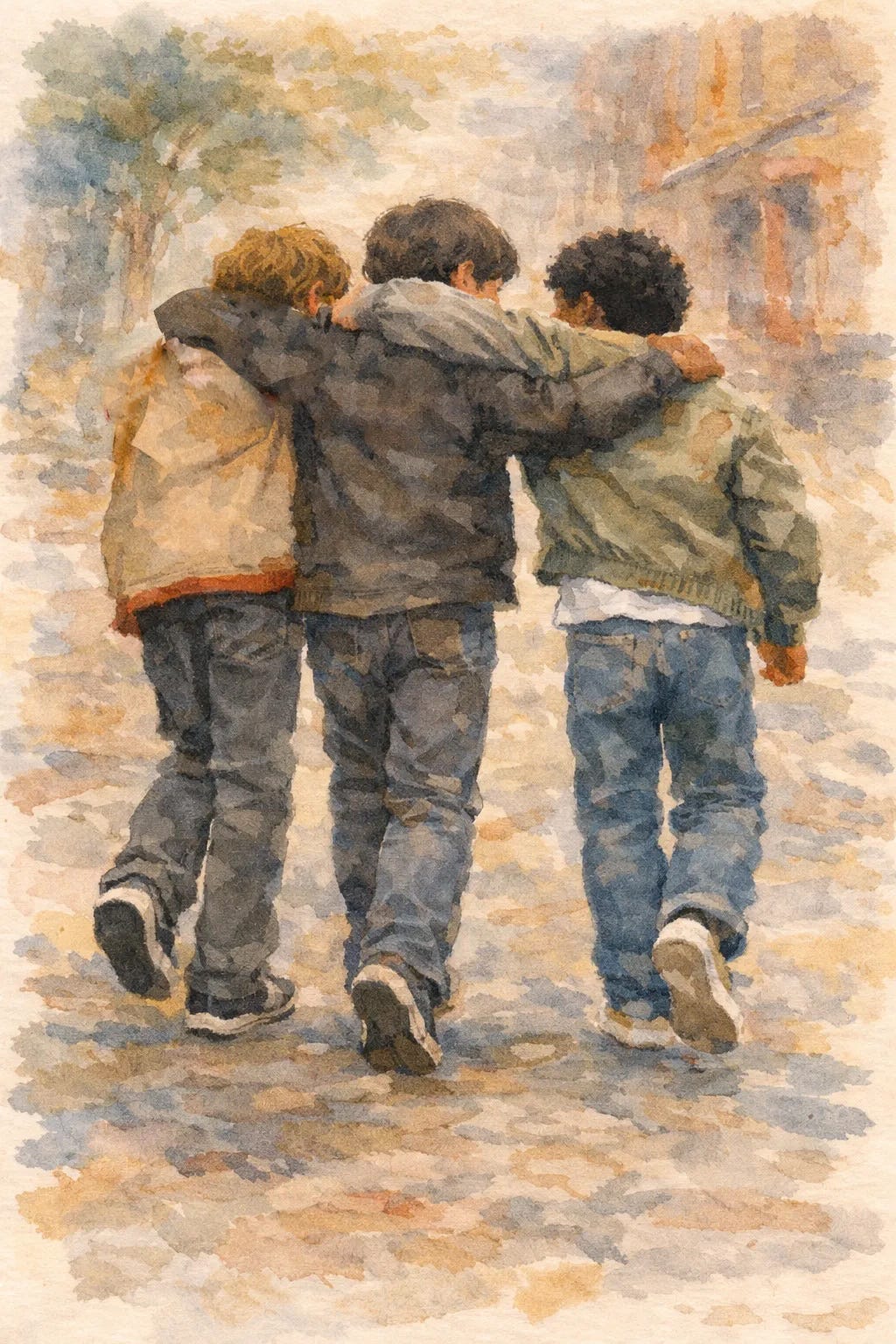
As they walked, the columnist greeted people everywhere they went. He thanked the doorman. He spoke kindly to clerks and receptionists. At one point, he paused to watch a road crew repairing part of the street and said to them, “That’s a fine job you’re doing.” Later, he complimented a woman the colleague described rather bluntly as plain.
When they walked away, the colleague said, “You realise she wasn’t exactly a supermodel.” The columnist shrugged. “Yes,” he said. “But if she is a schoolteacher, her entire class is going to have a wonderful day because of how she feels right now.”1
That line stayed with me. Encouragement multiplies. A single, sincere word travels much farther than its source. It passes through a classroom, family, or workplace before the day is done. The speaker may never know how far it went.
We saw a modern version of this idea recently in a short clip that went viral online. A woman named Barbara was stopped on the street and asked a simple question: “How can we brighten someone’s day?” Her answer was disarmingly simple. “If I see someone and I like their hat, shoes, or dress, I say so. People are always chuffed to bits.”
That was it. No programme. No platform. Just the habit of noticing people and saying something kind out loud. More than twelve million people watched the clip. The comments were filled with the same thought: “I wish more people did that.”2
Barbara had a theory about why the video resonated. Maybe people want to do it too. Maybe they’re just a little shy. It struck me as an honest observation. Many of us carry encouragement in our pockets but wait for the right moment or permission to share it. Sometimes the world changes because one person decides to speak up.
During the early months of the pandemic, a supermarket employee in Canada received a call from a woman thousands of kilometres away. The woman explained that her elderly mother, who lived nearby, could not leave the house. As delivery systems had buckled under demand and the waiting lists stretched for weeks, the employee decided to do something not in the staff handbook: she delivered the groceries herself.
Then she did it again. And again. When the elderly woman asked for something her store didn’t carry, the employee stopped at another shop. No cameras. No press release. Just a quiet decision. Another person’s need mattered enough to act.
Stories like that make us pause. Partly because they are beautiful. Partly because they feel unusual. We have grown so used to the atmosphere of everyone looking after themselves that ordinary service can feel extraordinary. However, when you read the life and teaching of the Nazarene, this kind of life is presented as the most natural rhythm in the world.3 Notice people. Serve one another. Encourage freely. Give quietly. Not for applause or recognition, but because love has a way of multiplying itself when it is put into motion.
Thinking back on that childhood joke, I realise most of us still whisper our needs, hoping someone will notice. Hoping someone will see the small kitchen fire.
But kindness does something different. Kindness speaks.
Kindness notices the road crew and thanks them. It sees a stranger and says, “Great hat.” It hears an anxious voice and says, “I’ll bring the groceries.” These moments won’t make the news. But they might change the tone of a classroom, home, or day.
And when enough of these simple acts of kindness and words of encouragement echo through our days, the world quietly transforms, not from grand gestures, but because ordinary people choose to speak a kind word out loud. That is how meaningful change truly happens.
The story is commonly attributed to newspaper columnist Sydney J. Harris, whose reflections on everyday kindness appeared in widely syndicated columns in the Chicago Daily News and later the Chicago Sun-Times.
Boston Tea Party Café, “Barbara: How to Brighten Someone’s Day,” viral street interview clip, 2026. The short street interview received more than 12 million views across social media platforms.
Matthew 7:12.